
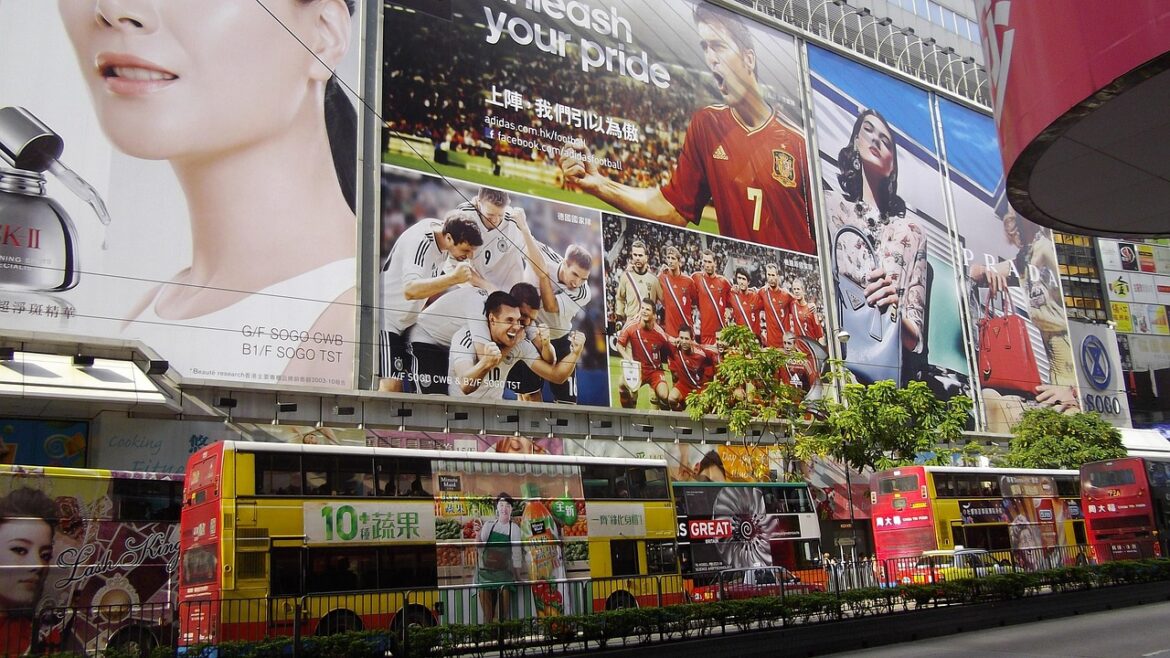
Billboards are one of the oldest forms of advertising, yet they remain a powerful tool in the modern marketer’s arsenal. In an era where consumers are constantly bombarded with digital content—pop-ups, pre-rolls, emails, and social ads—there’s something refreshingly simple about a well-designed billboard. But don’t let that simplicity fool you. Behind every effective billboard is a mix of psychology, strategy, and data-backed design choices.
In this article, we explore the science that underpins successful billboard advertising and offer practical strategies to help your message rise above the noise—quite literally.
The Psychology of Billboard Impact
Let’s start with how people process billboard ads. Unlike print or digital formats, where viewers have the choice to stop and read, billboard messages are passively consumed—usually while driving, walking, or commuting. This means the brain processes them peripherally and almost subconsciously.
According to studies in visual cognition, the human brain is wired to recognize patterns, shapes, and color long before it can read or process full sentences. That’s why the best billboards rely heavily on imagery and minimal text—they’re designed to be absorbed quickly and remembered easily.
Additionally, repetition plays a huge role. Drivers on the same route see the same sign every day, which reinforces the message through sheer frequency—a concept known as the “mere-exposure effect.” The more familiar something feels, the more we trust it.
Strategy #1: Prioritize Clarity and Brevity
Effective billboards don’t try to say everything. They focus on one message, one call to action, and deliver it clearly.
The rule of thumb? Six words or fewer. That may sound restrictive, but that limitation forces clarity. Think about iconic taglines like “Got Milk?” or “Think Different.” They stick because they’re short, bold, and unambiguous.
Keep in mind that read time is 5–7 seconds on average, and that’s assuming there’s no traffic distraction. If your message takes longer to absorb, it’s likely lost.
Pro tip: Say it out loud. If you can’t say your billboard copy comfortably in one breath, it’s probably too long.
Strategy #2: Use High-Contrast, Bold Design
Visibility is everything. You could have the smartest message in the world, but if it blends into the skyline, it’s wasted.
Start with contrast. Black text on a white background—or vice versa—remains the most legible. Avoid overly saturated images, thin fonts, and colors that don’t differentiate well (like red on dark gray). Use large sans-serif fonts that are readable from long distances, and make sure your logo or brand name is clearly visible.
Remember, you’re not designing for a gallery—you’re designing for a highway, a busy city street, or a subway platform. Think big. Think bold.
Strategy #3: Make It Memorable (Emotion or Humor Wins)
Emotion is the rocket fuel of advertising. A billboard that makes someone laugh, feel nostalgic, curious, or even uncomfortable is far more likely to be remembered than one that simply informs.
This is why humor and storytelling—when done right—work so well. Think of Chick-fil-A’s cows begging people to “Eat Mor Chikin,” or clever visual puns like a mattress ad showing someone floating in the clouds.
Psychologically, emotions act as anchors in memory formation. If you can elicit a reaction, even for a moment, you’re creating a stronger mental imprint.
Warning: Be careful with humor that requires too much interpretation. If the joke isn’t instantly clear, it won’t land.
Strategy #4: Location Is Part of the Message
Where your billboard is placed isn’t just a logistical decision—it’s a strategic one.
Different locations offer different benefits:
-
Highways = long viewing times, good for branding.
-
Urban intersections = lots of impressions, best for time-sensitive campaigns.
-
Near points of purchase (POPs) = great for product promotions and sales.
Some of the most successful campaigns tailor the message to the environment. A gym ad near fast-food chains that says “Burn it off here” or a ski resort ad that pops up during the first snowfall creates contextual relevance that drives action.
Smart tip: Use digital billboards to rotate location-specific or time-sensitive content (e.g., morning commute messages vs. evening traffic).
Strategy #5: Integrate with Other Channels
In today’s media landscape, no single channel operates in a vacuum. That’s where billboards become most powerful—as part of a multi-channel strategy.
For instance, a billboard that promotes a product using a short URL, QR code, or social media handle can drive people directly into your digital funnel. Similarly, geofencing technologies now allow advertisers to track mobile behavior after someone passes by a billboard—providing data on engagement and ROI.
Even if someone doesn’t act immediately, billboards contribute to brand recall, making digital ads feel more familiar later. It’s the reason big brands like Apple, Google, and Amazon still invest heavily in out-of-home (OOH) advertising despite having virtually unlimited online reach.
Strategy #6: Track and Optimize Performance
One of the common myths about billboards is that they’re hard to measure. That may have been true a decade ago, but not anymore.
Modern OOH networks now offer data on:
-
Impressions based on traffic counts
-
Dwell time for specific locations
-
Device tracking for attribution (e.g., how many phones passed the sign and later visited a website or store)
-
A/B testing creative on digital billboards
Combine this with digital analytics, and you can build a clear picture of how your billboard is performing—not just in terms of visibility, but actual conversions.
The Bottom Line: Simplicity Wins
There’s a science to billboard success, but it’s not overly complicated. At its core, it’s about understanding how people see, think, and feel—then designing for that moment in motion.
If you can communicate one message clearly, make it visually powerful, and integrate it into your broader campaign strategy, a billboard can punch far above its weight.
In a world where attention is the scarcest commodity, billboards still have one big advantage: you can’t swipe past them. That, in itself, makes them more relevant than ever.