
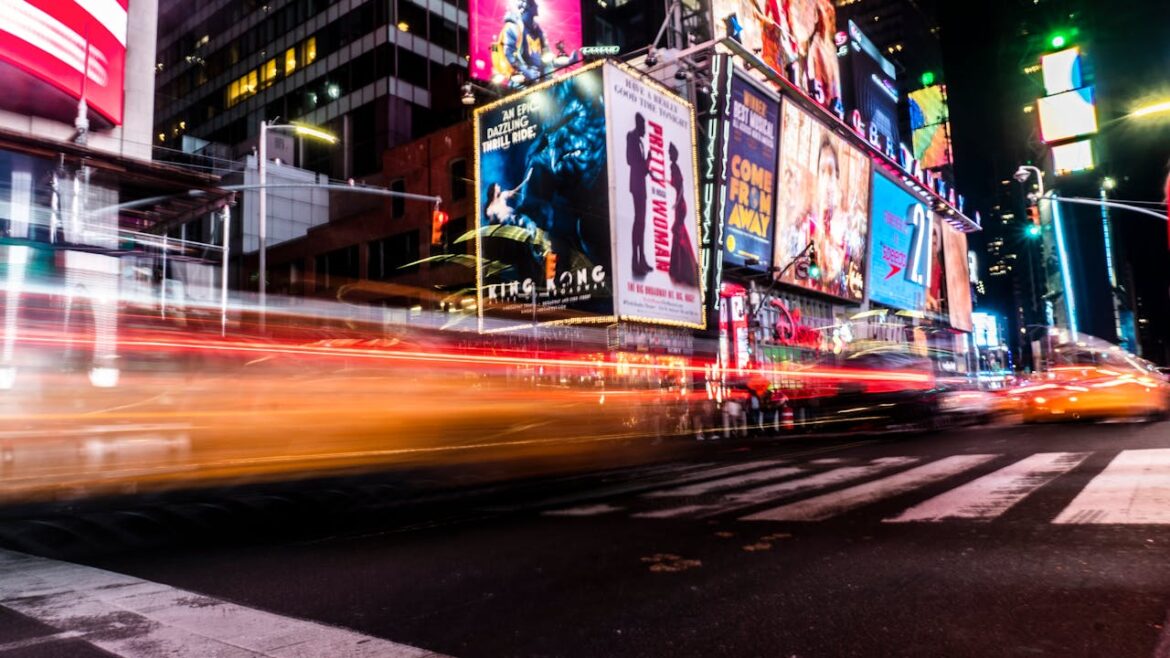
Walk down any major city street or drive along a busy highway, and you’ll see them—giant billboards broadcasting messages to the world. For decades, billboard advertising was all about static images printed on vinyl or paper, stretched over steel frames and illuminated by spotlights. But just as print newspapers and magazines have had to adapt in the digital age, so too has outdoor advertising. Welcome to the era of digital billboards, data-driven campaigns, and tech-integrated outdoor media. Billboard advertising is no longer just about being seen—it’s about being timely, targeted, and smart.
The Shift From Static to Dynamic
One of the most noticeable changes in the world of outdoor media is the shift from traditional static billboards to digital displays. Instead of a single ad staying up for weeks or months, digital billboards rotate multiple advertisements in a matter of seconds. This not only maximizes the revenue potential for billboard owners but also offers advertisers more flexibility.
Brands can now update their messaging on the fly. Running a weekend sale? Promote it in real time. Want to display different ads during the morning and evening commute? Easy. With digital billboards, advertisers can tailor content to the time of day, the weather, or even current events. For example, a coffee brand might advertise hot drinks on a cold morning, then switch to iced coffee in the afternoon when temperatures rise.
Data-Driven Outdoor Campaigns
As billboard technology has evolved, so has the way advertisers plan and measure their campaigns. Today, outdoor advertising is more data-driven than ever. Thanks to mobile tracking, GPS, and geolocation tools, advertisers can estimate how many people pass a particular billboard and even get a sense of who those people are based on demographic trends.
Programmatic digital out-of-home (DOOH) advertising is also growing fast. Much like online ads, DOOH allows marketers to buy ad space in real time, using software that analyzes traffic data and audience metrics. This automation helps brands reach the right people at the right time, optimizing both budget and impact.
For example, a food delivery app might schedule its billboard ads to appear just before lunch and dinner hours in high-traffic areas near office parks or residential neighborhoods. It’s targeted, efficient, and entirely different from the old spray-and-pray approach of traditional print billboards.
Integration With Mobile and Online Platforms
One of the most exciting developments in billboard advertising is how it now integrates with other forms of digital media. Smart campaigns are linking outdoor ads to mobile devices, social media, and even augmented reality (AR) experiences.
Take QR codes, for example. Once considered a gimmick, they’ve found new life in billboard advertising. A shopper sees an ad for a limited-time offer, scans the code, and is instantly taken to a website, app, or checkout page. The experience bridges the gap between physical space and digital engagement.
Social media tie-ins are also becoming more common. Some billboards now feature real-time content pulled from platforms like Instagram or Twitter, showcasing user-generated content, live polls, or trending hashtags. Others incorporate geofencing to deliver push notifications to smartphones when users are near a particular location.
In short, outdoor advertising is no longer a one-way street. It’s interactive, interconnected, and part of a larger, multi-channel marketing strategy.
The Rise of Creative Technology
The digital transformation of billboards isn’t just about screens and data—it’s also about creativity. With high-resolution LED displays and dynamic motion graphics, advertisers have more room than ever to experiment with engaging visuals and storytelling techniques.
Brands are using animation, video, and even 3D effects to make their billboards stand out in crowded urban environments. Some campaigns go even further with experiential elements. In 2021, Coca-Cola launched a billboard in London that dispensed samples of its new drink flavor. Other brands have used motion sensors and facial recognition to tailor messages based on who is viewing the ad.
This level of creativity wasn’t possible with traditional print. Now, a billboard can be more than just an ad—it can be an event, a spectacle, and a shareable moment all in one.
Environmental Considerations
With great technology comes greater responsibility, especially when it comes to environmental impact. While digital billboards offer many benefits, they also raise concerns about energy consumption and light pollution.
Fortunately, the industry is responding. Many digital billboards now use energy-efficient LED lighting and solar power to reduce their carbon footprint. Some companies are also exploring “green” screen materials and sustainable installation practices. The move toward responsible, eco-conscious outdoor advertising is gaining momentum, especially as consumers become more environmentally aware.
Challenges and Limitations
Despite the impressive advancements, billboard advertising in the digital age isn’t without its challenges. For one, regulations vary widely from city to city. Some urban areas have strict rules about digital signage, limiting brightness, animation, or how often content can change. Others prohibit digital billboards altogether in favor of preserving scenic or historic landscapes.
Then there’s the issue of ad fatigue. As consumers are bombarded with more content than ever—on their phones, in their inboxes, and now on massive digital displays—standing out requires not just technology, but thoughtful messaging and design.
Finally, there’s the cost factor. Digital billboards can be expensive to install and maintain. For smaller businesses, buying space on a digital board may still be out of reach, especially in prime locations. However, as technology becomes more affordable and widespread, access is likely to improve.
The Future of Billboard Advertising
Looking ahead, it’s clear that outdoor advertising will continue to evolve alongside technology. Innovations like AI-powered content, augmented reality, and even holographic displays are already being tested in major markets. As cities become smarter and more connected, billboards will likely become smarter too—responsive to real-time data, personalized to passersby, and seamlessly integrated into a digital ecosystem.
But even as it transforms, the core strength of billboard advertising remains the same: its ability to reach people where they live, work, and travel. In the digital age, that power is only amplified.